
Behavioural note-taking is a research method that captures people’s real-life actions in context. It reveals how behaviours unfold in the moment—offering clear, grounded insights into routines, environments, and outcomes for more practical, human-centred design.
When trying to understand the people you are designing for, behavioural note-taking is one of the key ethnographic techniques you can use. It offers immersive, contextual insights into what people do, rather than what they say they do — and often, the two differ significantly.
Behavioural notetaking helps uncover the relationship between a person’s actions and the outcomes of those actions, revealing constraints, habits, and routines that might not surface in interviews or self-reporting tools like journals.
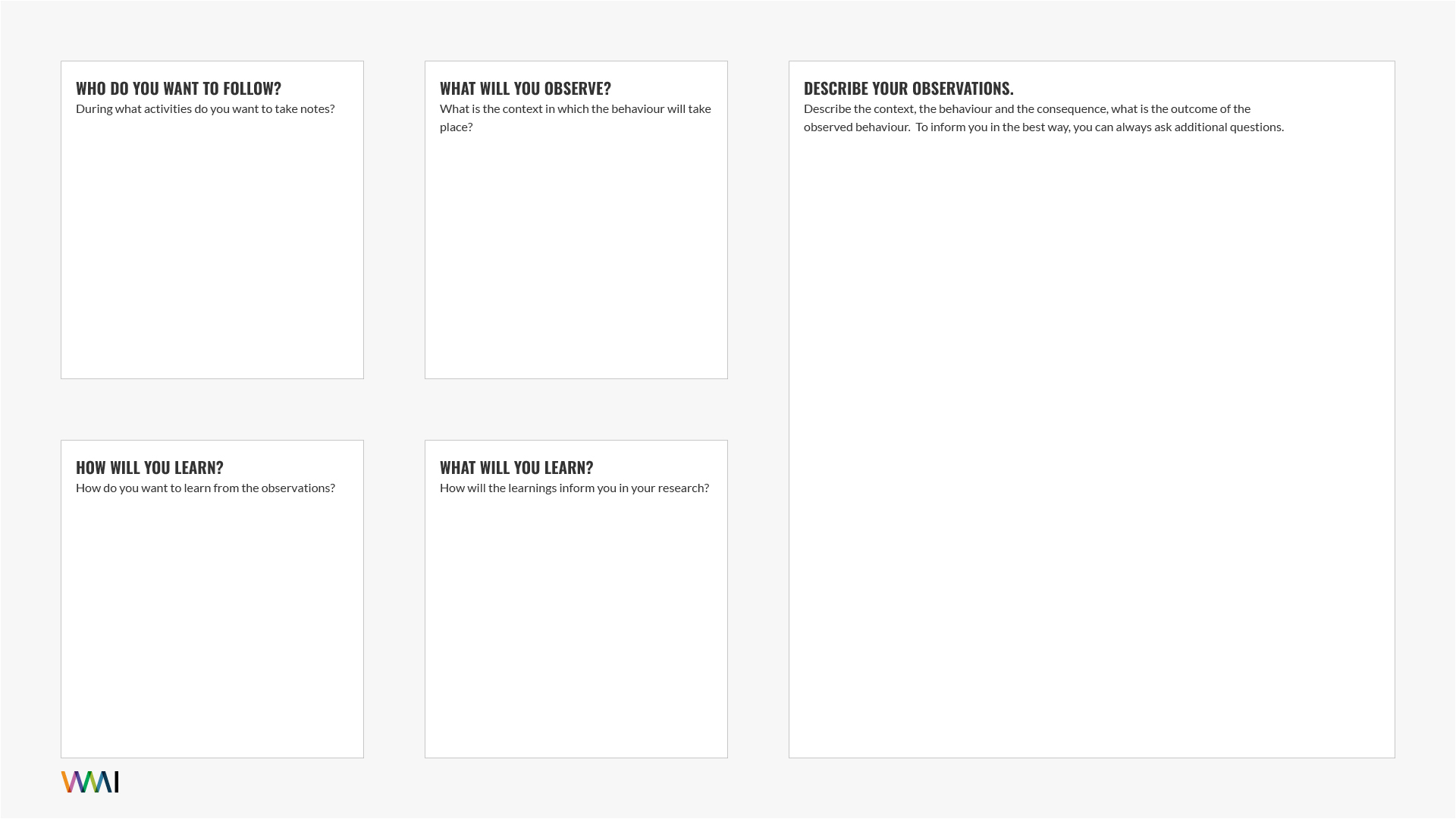
Behavioural note-taking is the structured observation of real-life behaviour in context. You watch people as they go about certain activities and document:
Unlike journaling, which gives the participant the voice, behavioural note-taking is researcher-driven. You observe and take notes, and you may occasionally ask clarifying questions if something is unclear or if understanding the behaviour’s rationale is important.
When you engage in behavioural note-taking, start by clearly defining:
During observation, focus on what actually happens — stay as objective as possible. Describe actions in detail and take note of any patterns, disruptions, or reactions. If permitted, you can ask brief questions to clarify intention or consequence, but the emphasis remains on observation.
Behavioural note-taking is useful when you want to understand real-life use, habits, pain points, or social interactions — especially in a specific setting or task. For instance, you might use it to see how healthcare workers interact with medical software, or how students navigate a cafeteria line.
Be clear about your learning goals. Are you looking for friction points? Hidden workarounds? Moments of confusion, or unexpected use of tools or spaces? This focus will guide what and how you observe.
While journaling focuses exclusively on end users, behavioural notetaking can include not only the primary beneficiaries of your work, but also other stakeholders whose actions affect outcomes: caregivers, coworkers, front-line employees, etc. Still, you should prioritise those whose actions most directly relate to your research question.
© 2026 WAAI Design
